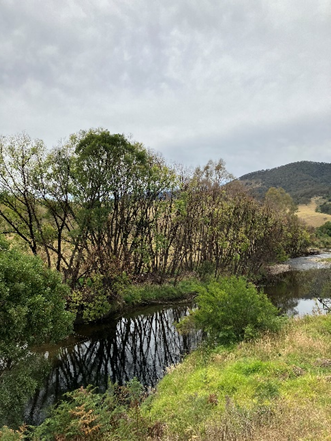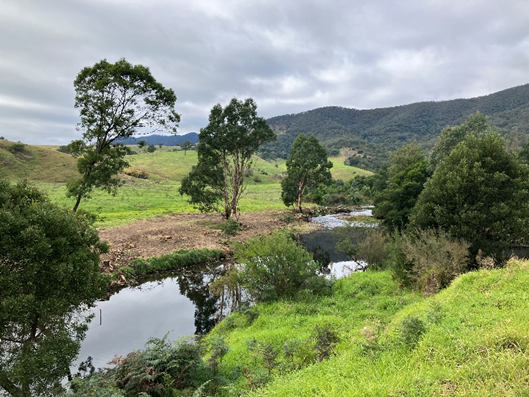
Willows are a major concern in many Australian waterways. They spread quickly, crowd out native plants, and disrupt natural water flow. The growth habitat of willows can increase the likelihood of erosion, and when leaves fall all at the same time, this impacts water quality and the food cycle of aquatic life.
Following the removal of established willows from riverbanks, fences are erected to keep livestock out, and native vegetation is planted. Rehabilitation efforts in the Upper Mitchell have been ongoing for many years, resulting in the successful establishment of native vegetation and increased river resilience.
East Gippsland CMA’s CEO Bec Hemming said, “Building on prior investments, the CMA will continue to target new or emerging willows in areas where they have been previously removed.”
“This ongoing effort is crucial in preventing the reestablishment of invasive species. By addressing new growth with a top-down approach, the East Gippsland CMA aims to protect the progress already achieved.”
These works are helping our waterways by encouraging the return of native plants that can withstand flooding. It is about supporting a healthy and diverse environment for the future. As part of its commitment to protecting and restoring Victoria’s waterways and catchments, this project is funded by the Victorian Government.