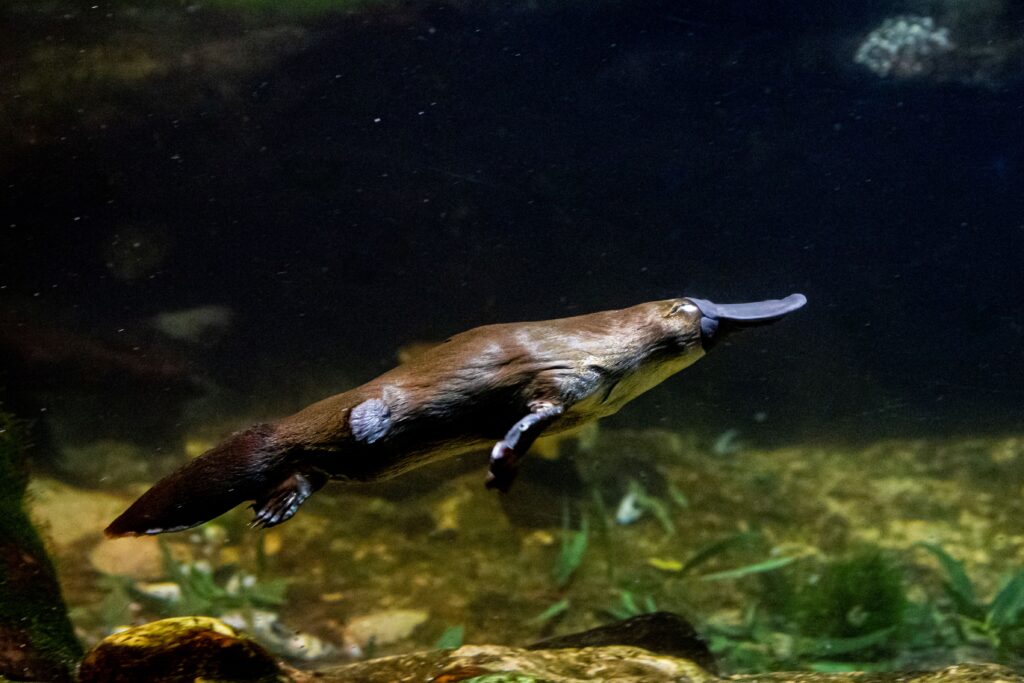
East Gippsland Catchment Management Authority (CMA) will soon begin works on the lower Mitchell River at the Barrier as part of its Platy Patch project, aimed at improving waterway health and providing better habitat for local platypus.
Platypus are known to live in this area, and the project has been carefully planned to protect and enhance their habitat. Works will include the removal of invasive willow infestations, installation of timber habitat structures, and revegetation with native plants. Together, these actions will help create more stable riverbanks, improve water quality, and provide shelter and feeding opportunities for platypus and other native species.
The project forms part of the landmark $24 million Platy Patch Project, a four-year, statewide initiative receiving significant joint funding from the Australian Government, the Victorian Government, and Melbourne Water.
An investment of $1.2m has been secured to support and protect platypus habitat in the Mitchell River, one of 14 project areas across Victoria.
Residents and visitors may see crews and machinery working at the site as the project progresses. To allow works to be carried out safely, the affected area will be closed to the public from mid-May. Exclusion fencing will be in place, and the area will reopen as soon as it is safe to do so.
The project is jointly funded by the Australia Government’s Natural Heritage Trust under the Urban Rivers and Catchments Program, the Victorian Government, and Melbourne Water, under the guidance of the Arthur Rylah Institute, with the support of One Tree Planted, City of Ballarat, Coliban Water, Zoos Victoria, and Catchment Management Authorities.
This project is being delivered in collaboration with Gunaikurnai Land and Waters Aboriginal Corporation (GLaWAC), East Gippsland Shire Council and East Gippsland Water.